使用 Xiao ESP32S3 控制 reSpeaker Flex 音量
这段代码让 XIAO ESP32S3 通过 I2S 接口使用外部 AIC3104 音频编解码芯片播放 440Hz 音调。它将音频输出到耳机(HPLOUT)或线路输出(LOP),并允许你在串口监视器中输入 + 或-来调节音量。音调是通过代码中的正弦波生成的(而不是来自文件)。你还可以通过输入 m 来切换输出模式(耳机或线路输出)。通过 I2C 控制 AIC3104,设置用于音量和输出功率的寄存器。
| reSpeaker Flex XVF3800 线性阵列搭配 XIAO ESP32S3 | reSpeaker Flex XVF3800 环形阵列搭配 XIAO ESP32S3 | |
|---|---|---|
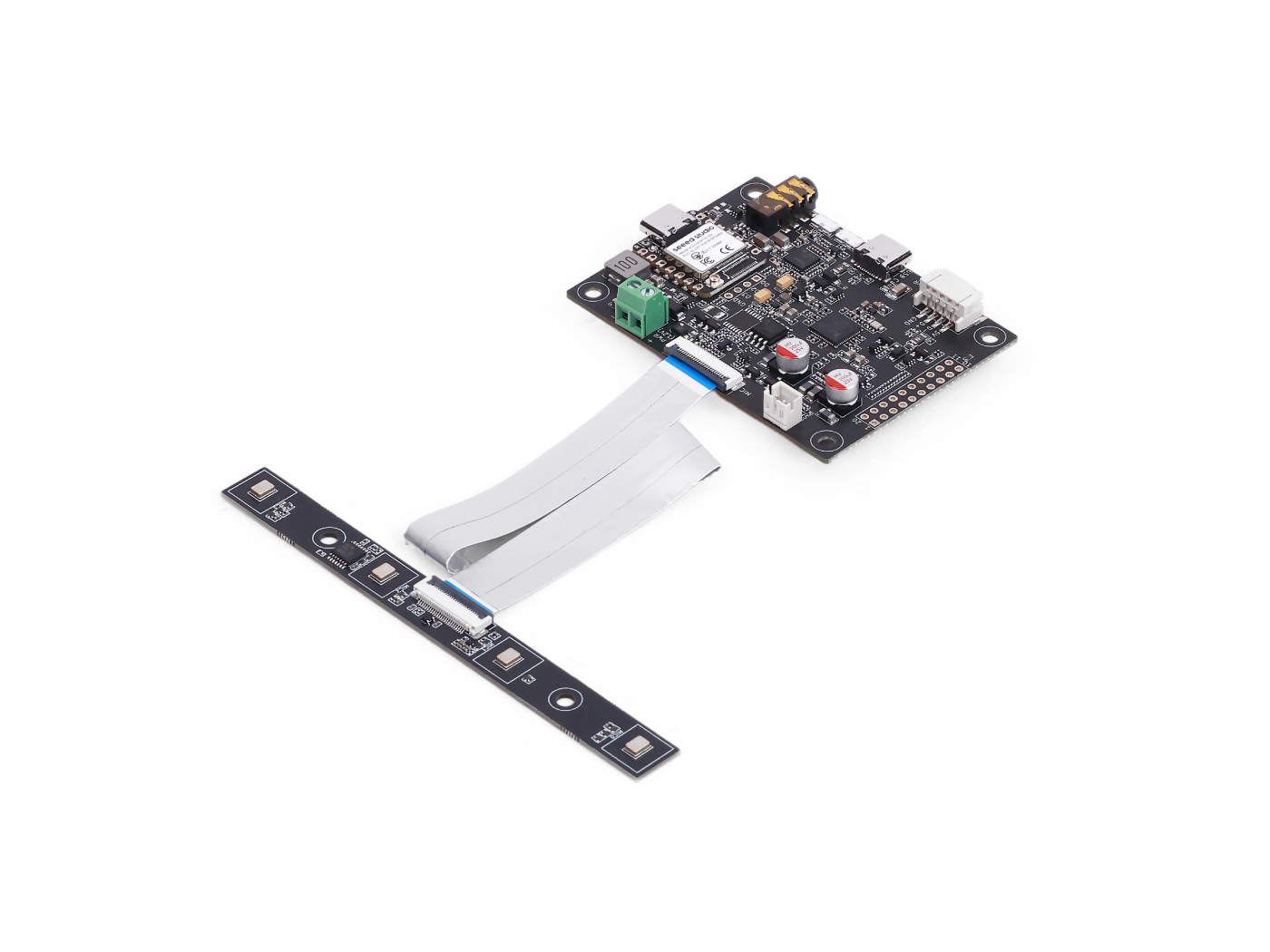 | 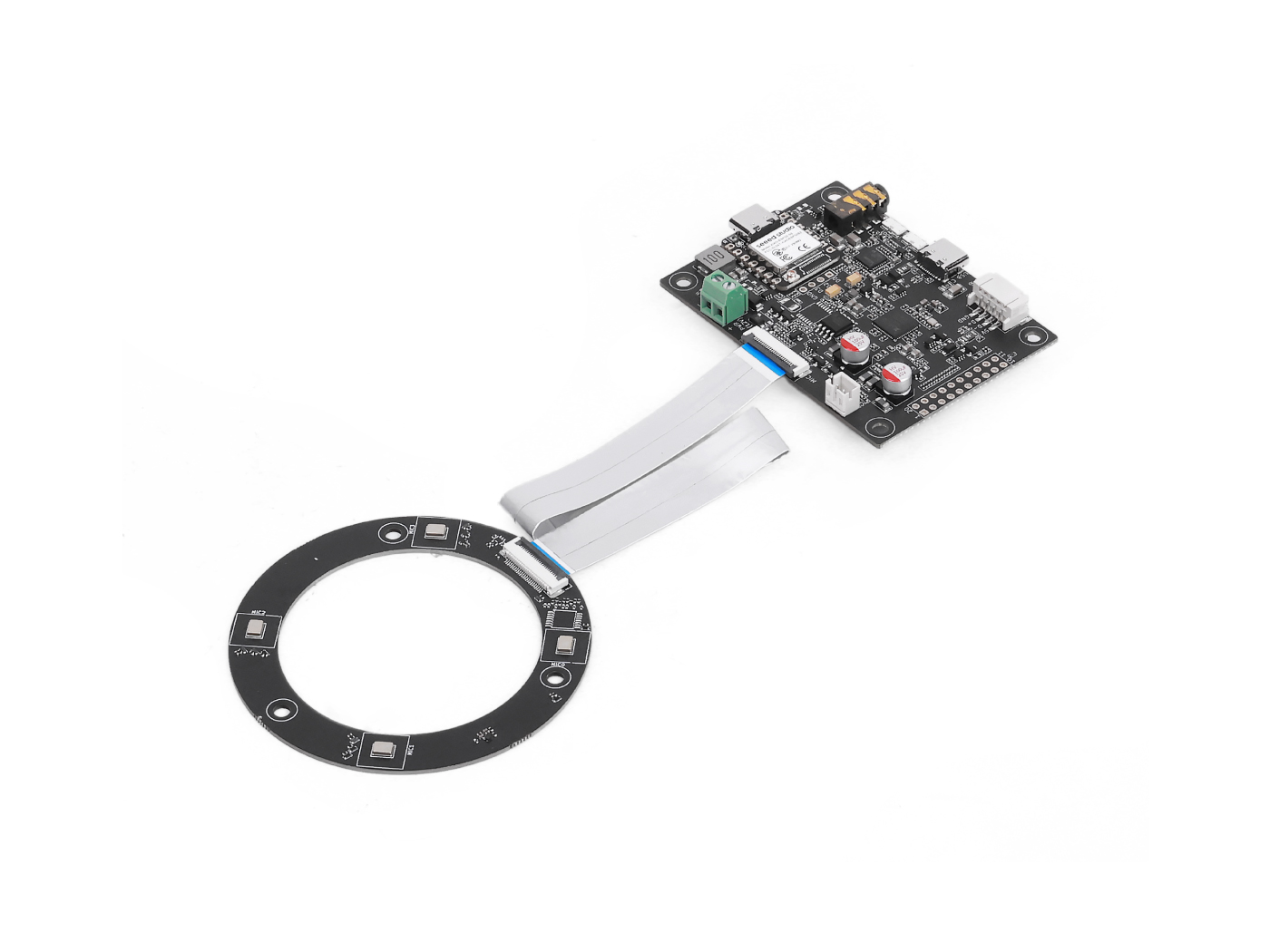 | |
工作原理
代码首先通过 I2C 接口初始化 AIC3104 音频编解码器,配置 DAC 音量和耳机/线路输出电平等关键输出参数。接着,使用 AudioTools 库中的 SineWaveGenerator 组件生成一个正弦波信号(具体为 440 Hz 音调)。然后,这个音频信号通过配置好的 I2S 接口从 ESP32S3 发送到 AIC3104 芯片。利用 StreamCopy 对象将正弦波持续送入编解码器,实现音频数据到 I2S 流的实时传输。同时,用户可以通过串口监视器与系统交互,实时控制音量级别和输出模式(耳机或线路输出)。
串口指令
系统会响应在串口监视器中输入的简单串口命令。按下 + 键会将音量提高一级,而按下 - 键会将音量降低一级。如果按下 m 键,输出模式会在耳机输出(HPLOUT)和线路输出(LOP)之间切换。这些命令允许你在无需修改或重新上传代码的情况下,对音频输出进行实时测试和调节。
代码
#include <Wire.h>
#include "AudioTools.h"

// AIC3104 I2C address
#define AIC3104_ADDR 0x18

// Register addresses
#define AIC3104_PAGE_CTRL        0x00
#define AIC3104_LEFT_DAC_VOLUME  0x2B
#define AIC3104_RIGHT_DAC_VOLUME 0x2C
#define AIC3104_HPLOUT_LEVEL     0x33
#define AIC3104_HPROUT_LEVEL     0x41
#define AIC3104_LEFT_LOP_LEVEL   0x56
#define AIC3104_RIGHT_LOP_LEVEL  0x5D

// Audio: 16kHz, stereo, 16-bit
AudioInfo info(16000, 2, 32);
SineWaveGenerator<int16_t> sineWave(32000);
GeneratedSoundStream<int16_t> sound(sineWave);
I2SStream out;
StreamCopy copier(out, sound);

// Volume: range 0–17 (0–8 = DAC range, 9–17 = analog boost)
int volume = 3;  // Changed from 8 to 3 for quieter start
bool useHPOUT = true; // true = HPLOUT (headphone), false = LOP (line out)

void aic3104_reg_write(uint8_t reg, uint8_t val) {
  Wire.beginTransmission(AIC3104_ADDR);
  Wire.write(reg);
  Wire.write(val);
  Wire.endTransmission();
}

void setupAIC3104() {
  Wire.begin();
  aic3104_reg_write(AIC3104_PAGE_CTRL, 0x00);

  // Set default 0dB DAC volume
  aic3104_reg_write(AIC3104_LEFT_DAC_VOLUME,  0x00);
  aic3104_reg_write(AIC3104_RIGHT_DAC_VOLUME, 0x00);

  // Set output to 0dB, unmuted, powered up
  aic3104_reg_write(AIC3104_HPLOUT_LEVEL,   0x0D);
  aic3104_reg_write(AIC3104_HPROUT_LEVEL,   0x0D);
  aic3104_reg_write(AIC3104_LEFT_LOP_LEVEL,  0x0B);
  aic3104_reg_write(AIC3104_RIGHT_LOP_LEVEL, 0x0B);
}

void setVolume(int vol) {
  vol = constrain(vol, 0, 17);
  volume = vol;

  if (vol <= 8) {
    // ✅ FIX: DAC register is attenuation — invert so higher vol = less attenuation
    // vol=8 → dacVal=0  (0 dB, loudest)
    // vol=0 → dacVal=72 (−72 dB, quietest)
    uint8_t dacVal = (8 - vol) * 9;
    aic3104_reg_write(AIC3104_LEFT_DAC_VOLUME,  dacVal);
    aic3104_reg_write(AIC3104_RIGHT_DAC_VOLUME, dacVal);

    // Output level fixed at 0dB
    aic3104_reg_write(AIC3104_HPLOUT_LEVEL,   0x0D);
    aic3104_reg_write(AIC3104_HPROUT_LEVEL,   0x0D);
    aic3104_reg_write(AIC3104_LEFT_LOP_LEVEL,  0x0B);
    aic3104_reg_write(AIC3104_RIGHT_LOP_LEVEL, 0x0B);
  } else {
    // DAC at max (0 dB), boost via analog output stage
    aic3104_reg_write(AIC3104_LEFT_DAC_VOLUME,  0x00);
    aic3104_reg_write(AIC3104_RIGHT_DAC_VOLUME, 0x00);

    uint8_t gain   = vol - 8;          // +1 to +9 dB above unity
    uint8_t outVal = (gain << 4) | 0x0B;

    if (useHPOUT) {
      aic3104_reg_write(AIC3104_HPLOUT_LEVEL, outVal);
      aic3104_reg_write(AIC3104_HPROUT_LEVEL, outVal);
    } else {
      aic3104_reg_write(AIC3104_LEFT_LOP_LEVEL,  outVal);
      aic3104_reg_write(AIC3104_RIGHT_LOP_LEVEL, outVal);
    }
  }

  // ✅ FIX: corrected dB label (attenuation = how far below max, not vol*1)
  Serial.print("Volume: step ");
  Serial.print(volume);
  Serial.print("/17  (");
  if (vol <= 8) {
    int dbAtten = (8 - vol) * 9;
    Serial.print("-");
    Serial.print(dbAtten);
    Serial.print(" dB DAC attenuation)");
  } else {
    Serial.print("+");
    Serial.print(vol - 8);
    Serial.print(" dB analog boost)");
  }
  Serial.println();
}

void setup() {
  Serial.begin(115200);
  while (!Serial);

  setupAIC3104();
  setVolume(volume);  // This will now start at 3/17

  auto config = out.defaultConfig(TX_MODE);
  config.copyFrom(info);
  config.pin_bck  = 8;
  config.pin_ws   = 7;
  config.pin_data = 44;
  config.is_master = false;

  out.begin(config);
  sineWave.begin(info, N_A4); // 440 Hz tone
}

void loop() {
  copier.copy();

  if (Serial.available()) {
    char c = Serial.read();

    if (c == '+' && volume < 17) {
      setVolume(volume + 1);
    } else if (c == '-' && volume > 0) {
      setVolume(volume - 1);
    } else if (c == 'm') {
      useHPOUT = !useHPOUT;
      setVolume(volume);
      Serial.print("Output switched to: ");
      Serial.println(useHPOUT ? "HPLOUT (headphone)" : "LOP (line out)");
    }
  }
}
技术支持与产品讨论
感谢你选择我们的产品!我们将为你提供多种支持,确保你在使用我们产品的过程中尽可能顺畅。我们提供多种沟通渠道,以满足不同的偏好和需求。