DoA と VAD reSpeaker Flex と Xiao ESP32S3
はじめに
ReSpeaker Flex は XMOS XVF3800 をベースとしたマルチマイク音声処理ソリューションで、リアルタイムのオーディオインテリジェンスを必要とする組み込みアプリケーション向けに設計されています。XVF3800 は内部で Voice Activity Detection (VAD) と Direction of Arrival (DoA) を計算し、音声が存在するタイミングと、その音声がどの方向から来ているかを示します。これらの推論結果は、リソースベースのコマンドを使用して I2C 経由でホスト MCU から直接アクセスできるため、ホスト側で生のオーディオを処理することなく、音声起動、音源位置推定、方向認識フィードバックなどの機能を実現できます。
| reSpeaker Flex XVF3800 直線型(XIAO ESP32S3 搭載) | reSpeaker Flex XVF3800 円形(XIAO ESP32S3 搭載) | |
|---|---|---|
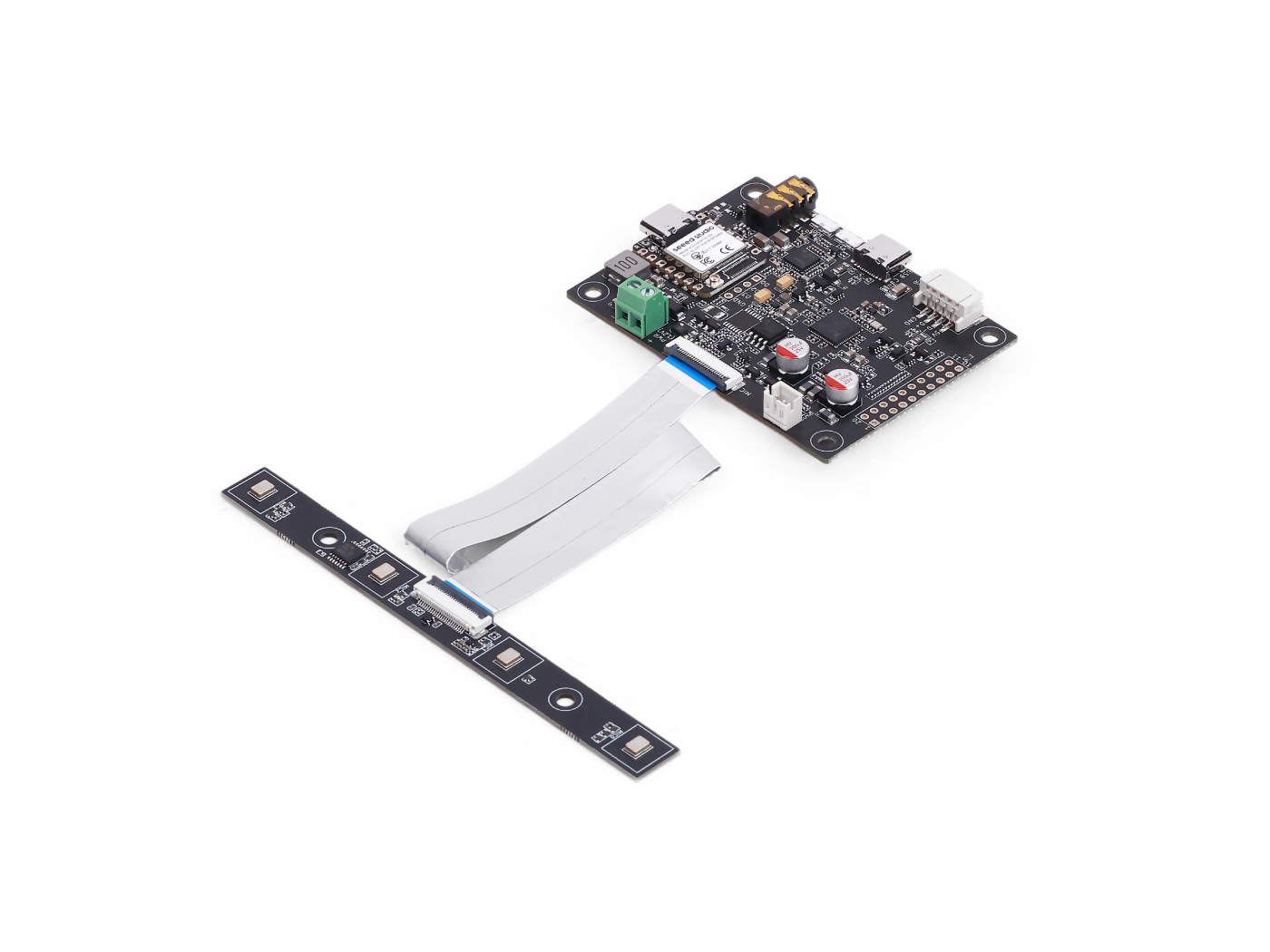 | 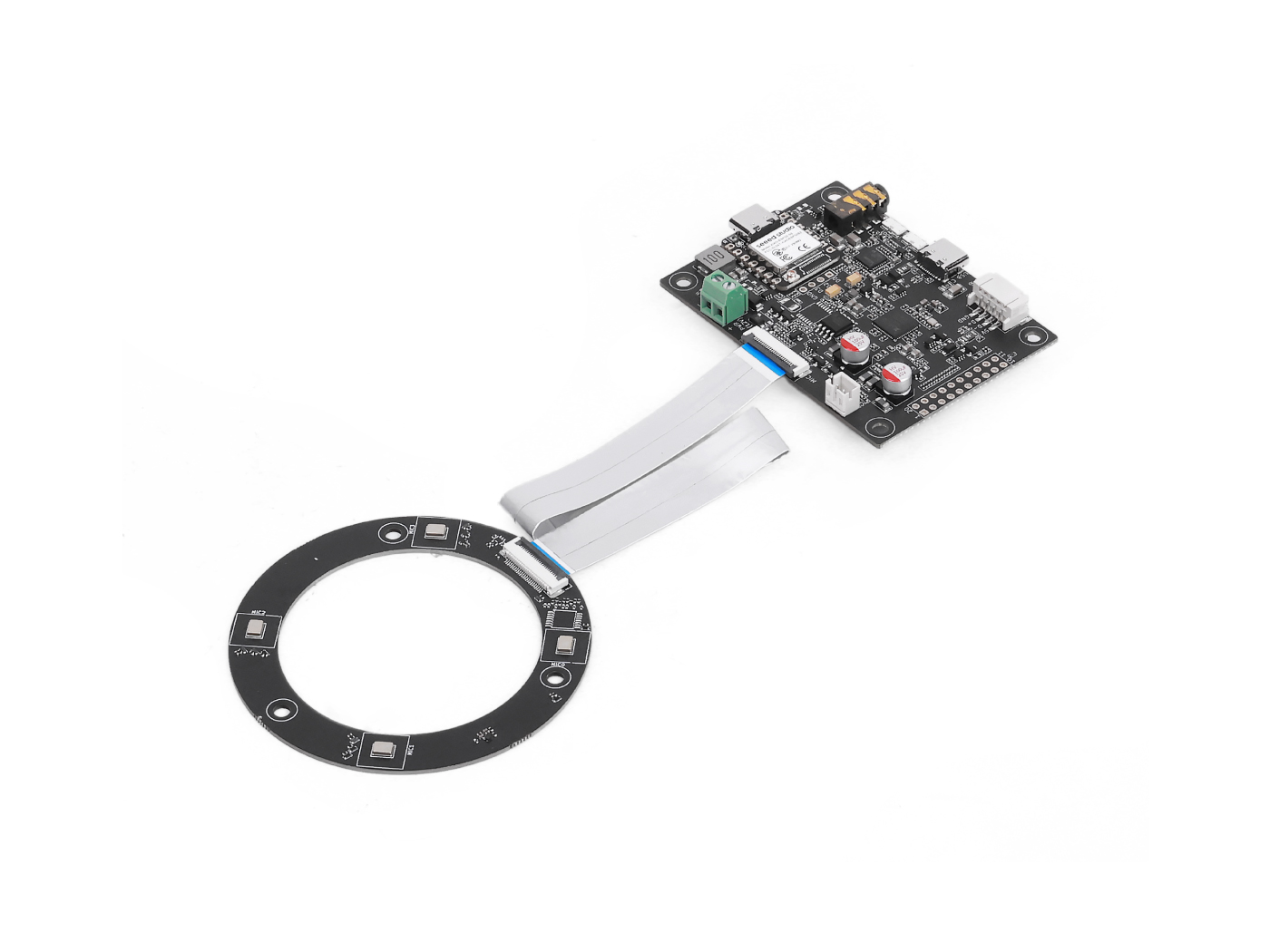 | |
注記
このコードをサポートするファームウェアは respeaker_xvf3800_i2s_master_dfu_firmware_v1.0.x_48k_test5.bin です。必ず最初にこのファームウェアを書き込んでください。
Arduino コード
#include <Wire.h>
#include "AudioTools.h"

// ── I2C ──────────────────────────────────────────────────────────
#define XMOS_ADDR              0x2C
#define GPO_SERVICER_RESID     20   // resid
#define GPO_SERVICER_RESID_DOA 18   // cmdid — fixed from 19 to 18 (matches Python)
#define GPO_DOA_READ_NUM_BYTES  4

// ── I2S pins (XIAO ESP32S3 ↔ ReSpeaker Flex) ─────────────────────
#define I2S_BCK_PIN    8
#define I2S_WS_PIN     7
#define I2S_DATA_PIN  43   // RX from XVF3800

// ── Audio config ──────────────────────────────────────────────────
const int SAMPLE_RATE   = 16000;
const int CHANNELS      = 2;    // stereo interleaved from XVF3800
const int BITS          = 32;
const int BLOCK_SAMPLES = 512;  // samples per chunk (both channels)

AudioInfo audioInfo(SAMPLE_RATE, CHANNELS, BITS);
I2SStream i2s;

// ── Timing ────────────────────────────────────────────────────────
unsigned long lastDoaMs = 0;
const unsigned long DOA_INTERVAL_MS = 250;

// ─────────────────────────────────────────────────────────────────
bool read_doa(uint16_t &doa_angle, uint16_t &speech) {
  Wire.beginTransmission(XMOS_ADDR);
  Wire.write(GPO_SERVICER_RESID);
  Wire.write(GPO_SERVICER_RESID_DOA | 0x80);  // read flag
  Wire.write(GPO_DOA_READ_NUM_BYTES + 1);      // +1 for status byte
  if (Wire.endTransmission() != 0) return false;

  uint8_t total = GPO_DOA_READ_NUM_BYTES + 1;
  Wire.requestFrom(XMOS_ADDR, total);
  if (Wire.available() < total) return false;

  uint8_t status = Wire.read();  // status byte (0x00 = OK)
  uint8_t buf[4];
  for (uint8_t i = 0; i < GPO_DOA_READ_NUM_BYTES; i++) buf[i] = Wire.read();

  // Match Python: DOA = result[1] + result[2]*256
  //               SPEECH = result[3]
  doa_angle = (uint16_t)buf[0] | ((uint16_t)buf[1] << 8);
  speech    = (uint16_t)buf[2] | ((uint16_t)buf[3] << 8);

  return true;
}

// RMS on left channel only (stride 2 over stereo interleaved buffer)
float compute_rms(int32_t *samples, int total_samples) {
  double sum = 0;
  int count = 0;
  for (int i = 0; i < total_samples; i += 2) {
    double s = (double)samples[i] / (double)INT32_MAX;
    sum += s * s;
    count++;
  }
  return count > 0 ? (float)sqrt(sum / count) : 0.0f;
}

// ─────────────────────────────────────────────────────────────────
void setup() {
  Serial.begin(115200);
  while (!Serial);

  Wire.begin();
  delay(500);

  I2SConfig cfg = i2s.defaultConfig(RX_MODE);
  cfg.copyFrom(audioInfo);
  cfg.pin_bck     = I2S_BCK_PIN;
  cfg.pin_ws      = I2S_WS_PIN;
  cfg.pin_data_rx = I2S_DATA_PIN;
  cfg.is_master   = true;

  if (!i2s.begin(cfg)) {
    Serial.println("ERROR: I2S init failed");
    while (true);
  }

  Serial.println("Ready — angle | speech | rms");
}

// ─────────────────────────────────────────────────────────────────
static int32_t audioBuf[BLOCK_SAMPLES * CHANNELS];

void loop() {
  // ── I2S read ─────────────────────────────────────────────────
  size_t bytesRead = i2s.readBytes((uint8_t *)audioBuf, sizeof(audioBuf));
  float rms = 0.0f;
  if (bytesRead > 0) {
    rms = compute_rms(audioBuf, bytesRead / sizeof(int32_t));
  }

  // ── DOA poll ─────────────────────────────────────────────────
  unsigned long now = millis();
  if (now - lastDoaMs >= DOA_INTERVAL_MS) {
    lastDoaMs = now;

    uint16_t doa = 0, speech = 0;
    if (read_doa(doa, speech)) {
      Serial.printf("%4u deg | %s | %.4f\n",
        doa,
        speech ? "SPEECH" : "silent",
        rms
      );
    } else {
      Serial.println("I2C read failed");
    }
  }
}
技術サポート & 製品ディスカッション
弊社製品をお選びいただきありがとうございます。私たちは、製品をできるだけスムーズにご利用いただけるよう、さまざまなサポートを提供しています。お好みやニーズに応じてお選びいただける、複数のコミュニケーションチャネルをご用意しています。