reSpeaker XVF3800 USB Mic Array with XIAO ESP32S3 DoA and VAD
Introduction
The ReSpeaker XVF3800 is a multi-microphone voice processing solution based on the XMOS XVF3800, designed for embedded applications requiring real-time audio intelligence. The XVF3800 internally computes Voice Activity Detection (VAD) and Direction of Arrival (DoA) to indicate when speech is present and the direction it originates from. These inference results can be accessed directly by a host MCU over I2C using resource-based commands, enabling features such as wake-on-voice, sound source localization, and direction-aware feedback without processing raw audio on the host.
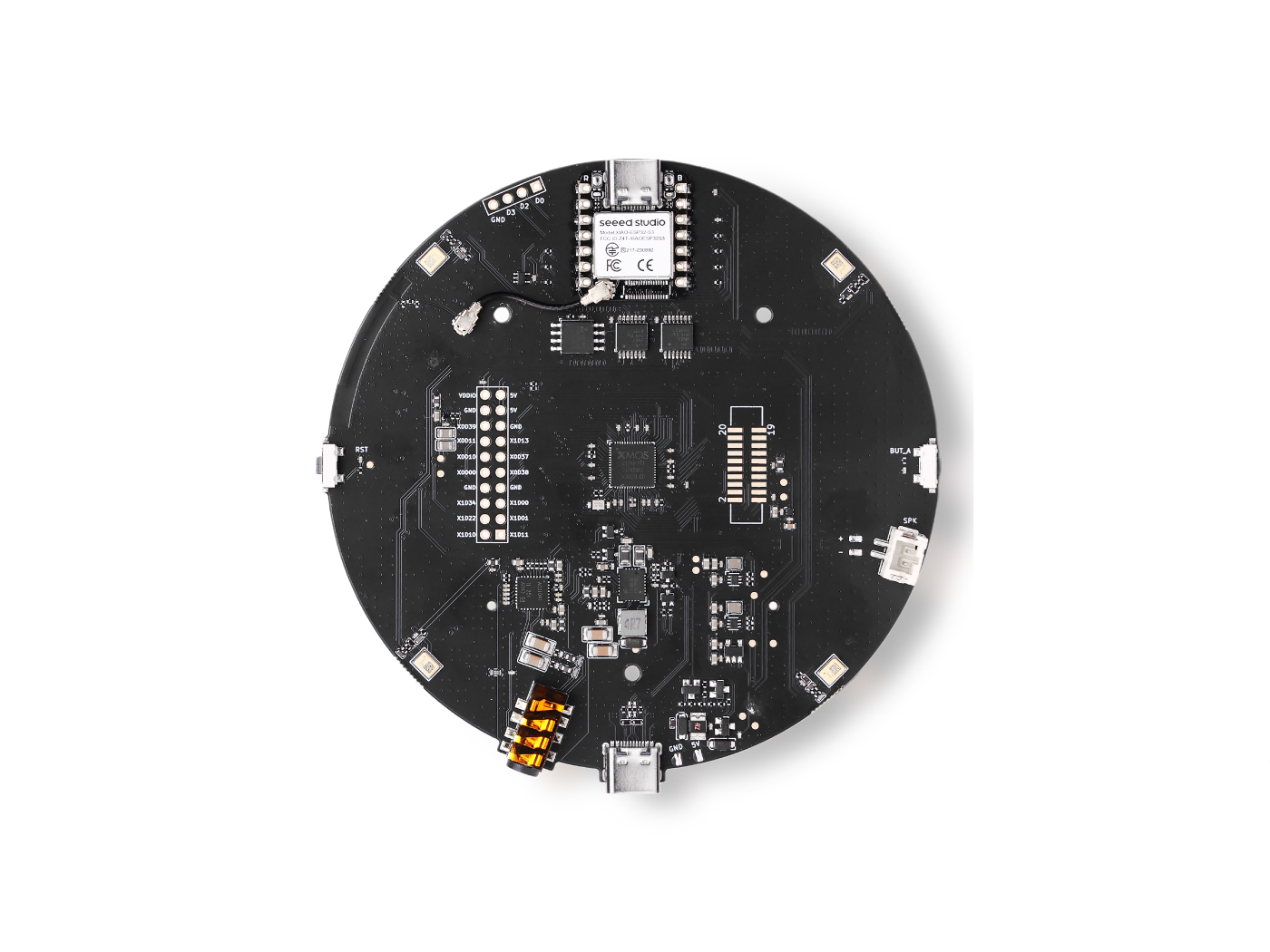
The Firmware that support for this code is respeaker_xvf3800_i2s_master_dfu_firmware_v1.0.x_48k_test5.bin. So please make sure to flash first
Arduino Code
#include <Wire.h>

#define XMOS_ADDR 0x2C  // I2C 7-bit address

#define GPO_SERVICER_RESID            20
#define GPO_SERVICER_RESID_LED_EFFECT 12
#define GPO_SERVICER_RESID_DOA        19
#define GPO_DOA_READ_NUM_BYTES        4

void setup() {
  Serial.begin(115200);
  while (!Serial);
  Wire.begin();
  delay(2000);
  Serial.println("XVF3800 DoA Read Test Starting...");
  write_led_effect(4);
}

void loop() {
  uint16_t doa_values[2] = {0};
  uint8_t status = 0xFF;

  bool success = read_doa_values((uint8_t *)doa_values, &status);

  if (success) {
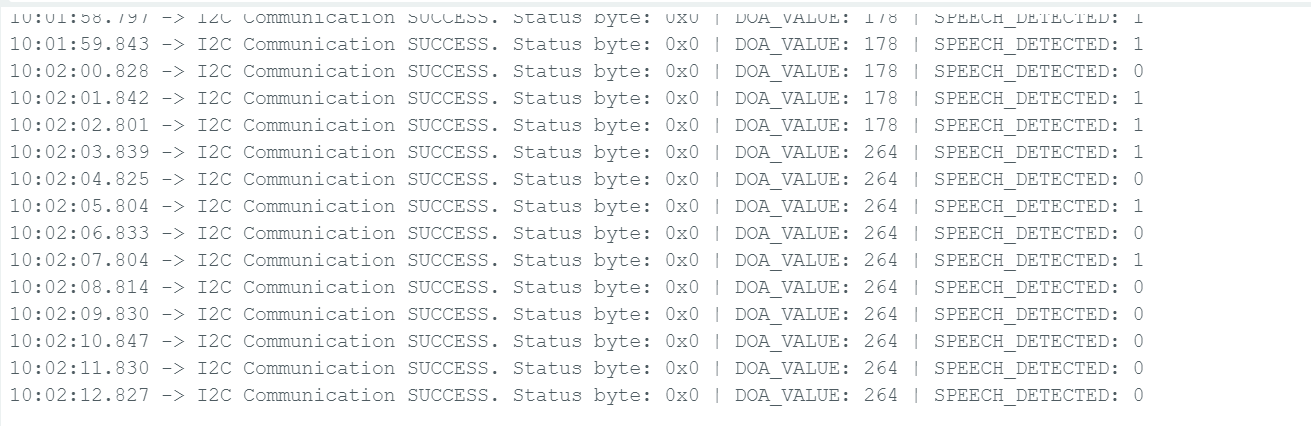
    Serial.print("I2C Communication SUCCESS. Status byte: 0x");
    Serial.print(status, HEX);
    Serial.print(" | DOA_VALUE: ");
    Serial.print(doa_values[0]);
    Serial.print(" | SPEECH_DETECTED: ");
    Serial.println(doa_values[1]);
  } else {
    Serial.println("Failed to read DoA values.");
  }

  delay(1000);
}

bool read_versions(uint8_t *buffer, uint8_t *status) {
  const uint8_t resid = 48;
  const uint8_t cmd = 0 | 0x80;
  const uint8_t read_len = 3;

  // Step 1: Write command
  Wire.beginTransmission(XMOS_ADDR);
  Wire.write(resid);
  Wire.write(cmd);
  Wire.write(read_len + 1);
  uint8_t result = Wire.endTransmission();

  if (result != 0) {
    Serial.print("I2C Write Error: ");
    Serial.println(result);
    return false;
  }

  // Step 2: Read response (status + payload)
  Wire.requestFrom(XMOS_ADDR, (uint8_t)(read_len + 1));
  if (Wire.available() < read_len + 1) {
    Serial.println("I2C Read Error: Not enough data received.");
    return false;
  }

  *status = Wire.read();
  for (uint8_t i = 0; i < read_len; i++) {
    buffer[i] = Wire.read();
  }

  return true;
}

bool read_doa_values(uint8_t *buffer, uint8_t *status) {
  const uint8_t resid = GPO_SERVICER_RESID;
  const uint8_t cmd = GPO_SERVICER_RESID_DOA | 0x80;
  const uint8_t read_len = GPO_DOA_READ_NUM_BYTES;

  // Step 1: Write command
  Wire.beginTransmission(XMOS_ADDR);
  Wire.write(resid);
  Wire.write(cmd);
  Wire.write(read_len + 1);
  uint8_t result = Wire.endTransmission();

  if (result != 0) {
    Serial.print("I2C Write Error: ");
    Serial.println(result);
    return false;
  }

  // Step 2: Read response (status + payload)
  Wire.requestFrom(XMOS_ADDR, (uint8_t)(read_len + 1));
  if (Wire.available() < read_len + 1) {
    Serial.println("I2C Read Error: Not enough data received.");
    return false;
  }

  *status = Wire.read();
  for (uint8_t i = 0; i < read_len; i++) {
    buffer[i] = Wire.read();
  }

  return true;
}

void write_led_effect(uint8_t effect) {
  Wire.beginTransmission(XMOS_ADDR); // Begin I2C transmission to XVF3800
  Wire.write(GPO_SERVICER_RESID);                 // Write the resource ID
  Wire.write(GPO_SERVICER_RESID_LED_EFFECT);                   // Write the command ID
  Wire.write(1);       // Write number of payload bytes
  Wire.write(effect);           // Write each payload byte
  Wire.endTransmission();           // End the I2C transmission
}
Expected Output
Tech Support & Product Discussion
Thank you for choosing our products! We are here to provide you with different support to ensure that your experience with our products is as smooth as possible. We offer several communication channels to cater to different preferences and needs.