The Course Workflow
The Course Workflow
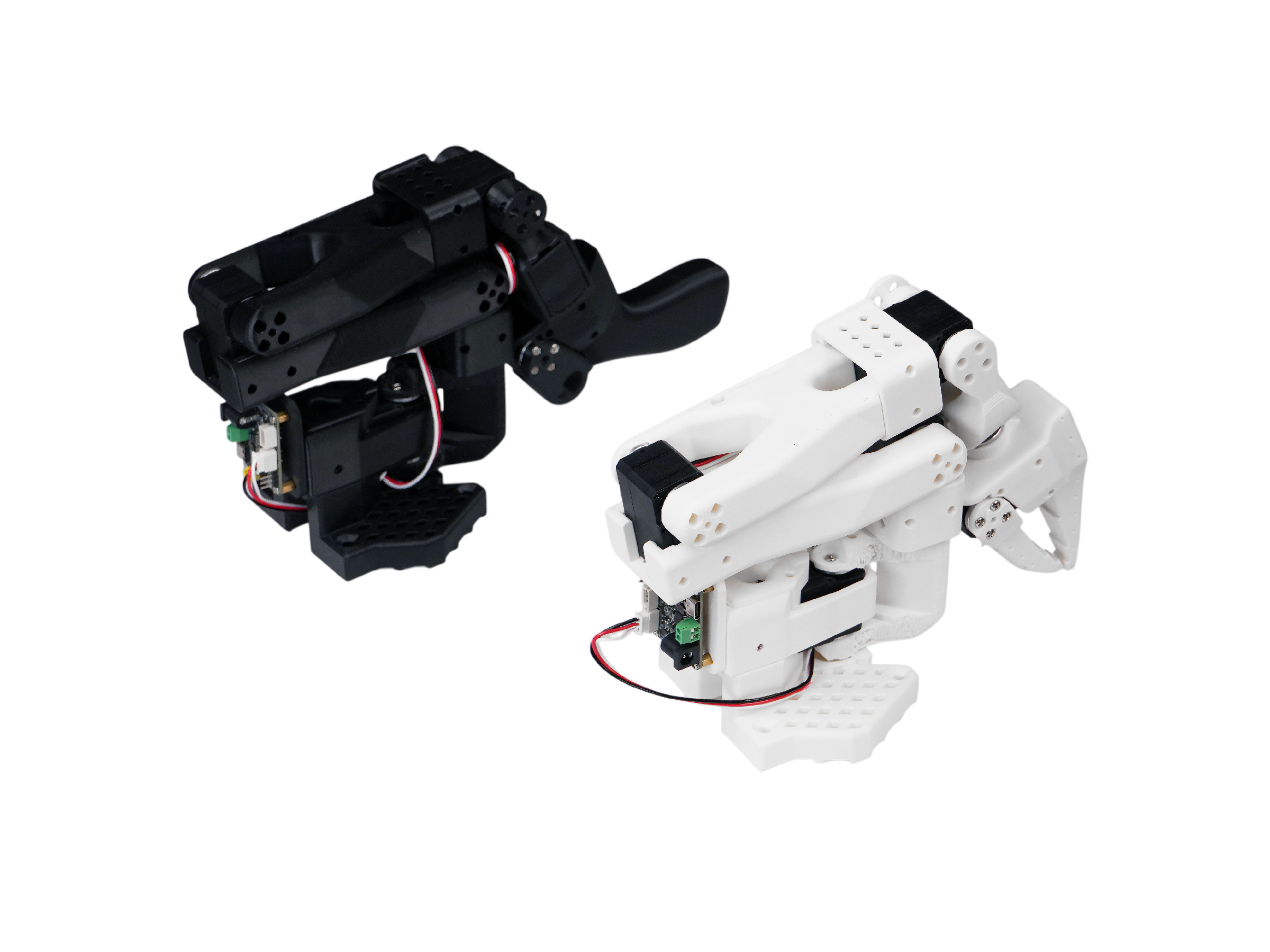
This course focuses on the complete development workflow of the SO-ARM101 robotic arm. It guides learners through hardware setup, data collection, model training, simulation validation, and finally deployment and inference — on the real arm and on Jetson edge devices. By combining LeRobot, NVIDIA Isaac Sim, Isaac GR00T N1.7, and Jetson, the course builds a complete experimental environment for robot learning and embodied AI.
Through this course, learners will understand how to:
- collect robotic-arm data via leader-follower teleoperation;
- train a Vision-Language-Action policy with Isaac GR00T N1.7 on that data;
- scale up with simulated episodes and data augmentation;
- evaluate the trained model in the real world;
- deploy the model on a Jetson device and run the task at the edge.
The Demonstration Task
The Demonstration Task
For demonstration purposes, this course uses a simple pick-and-place task: put the three vials into the vial rack. The same task is used by NVIDIA's SO-101 workshop, so your dataset stays compatible with NVIDIA's reference datasets and checkpoints.
You can adjust the target task according to your own environment and requirements — the pipeline (collect → train → deploy → evaluate) does not change.
What This Course Emphasizes
What This Course Emphasizes
This course does not only focus on training and running a single model. More importantly, it emphasizes how to build a reproducible and extensible robotic experimental platform:
- a fixed dataset schema (six joint dimensions, two cameras, one task sentence) that works unchanged across the real robot, Isaac Sim, and Jetson;
- commands that were verified end to end on the SO-ARM101;
- the same tools as the reBot DLI course, so you can move between the two arms without relearning the pipeline.